Why do pianists use 2 clefs? Is up and down on the piano the same as up and down in note pitch? Teaching tips by Piano Comics
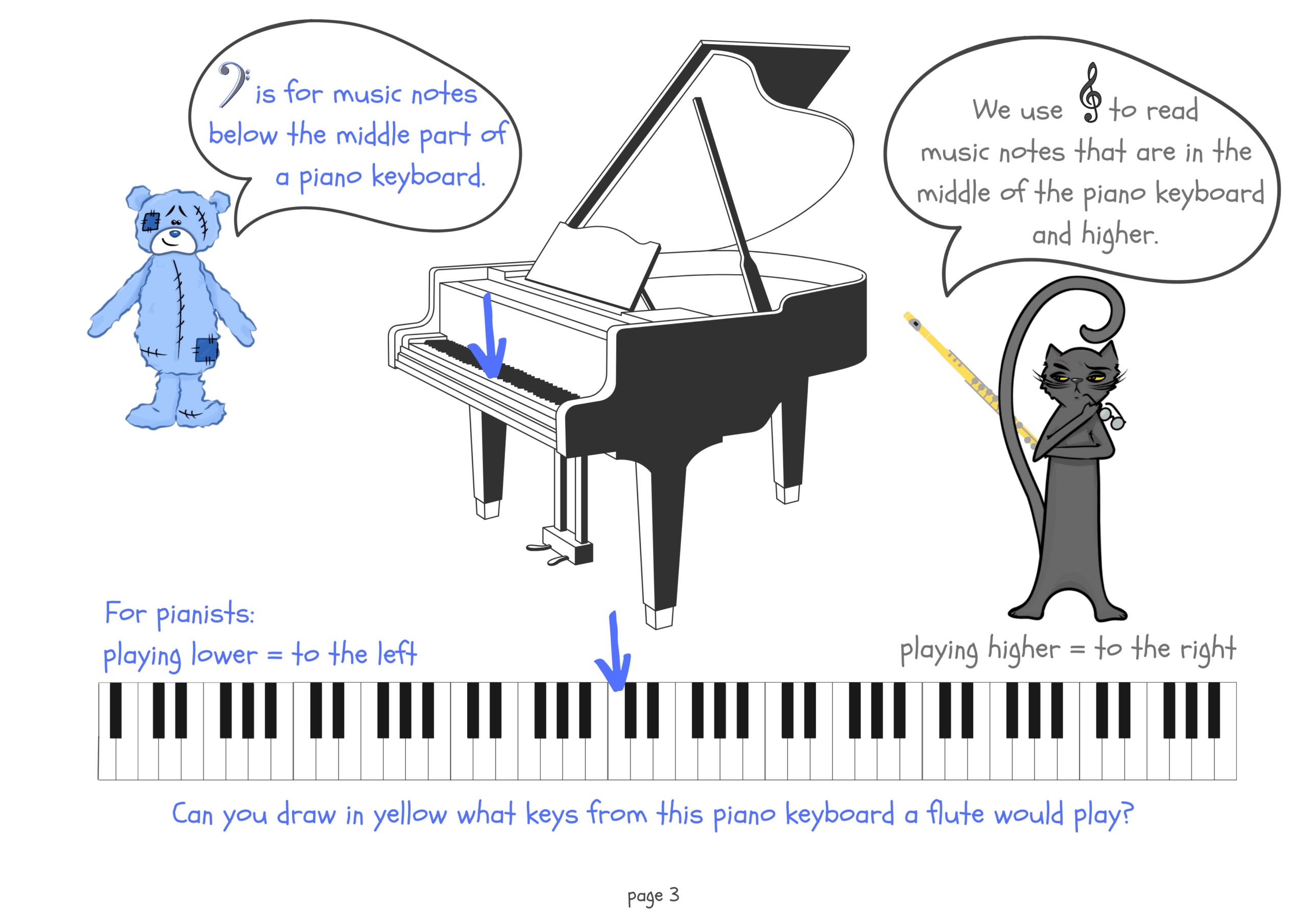
When teaching piano beginners a natural confusion may occur. When we need to play higher or the treble clef the kids don’t always have a reflex of using their right hand or looking to the right of the keyboard. This is understandable because they have always in their everyday life – and rightfully so – related to up and down, high and low literally. Geographically. Anatomically. But the piano keyboard does not stand vertically. It’s horizontal, stable at this position. So, even if they press higher keys – by experience or just plain instinct – they do not relate ‘going to the right’ with going/playing/singing higher. And the same for ‘going to the left’ with going/playing/singing lower. We, as piano teachers need to bridge this gap of ‘distorted geography’ on the piano keyboard.
Use not just your words or these new instructions ( play to the right for higher note pitches etc ) , but also live examples such as opening the piano lid and showing them how thin the chords are while we go higher/right and how much fatter and more in numbers are the chords in lower octaves, to the left. This literal/ visual/ practical example is very easy to grasp and proves itself. Then, help the visual learners: draw the 2 clefs on the 2 staves. Show how the treble clef is – usually- for their right hand because going to the right is going higher and the bass clef for the left hand -most of the times- since going lower, deeper makes our hand go to the left. Make them sit in the middle c and use that position as an anchor.
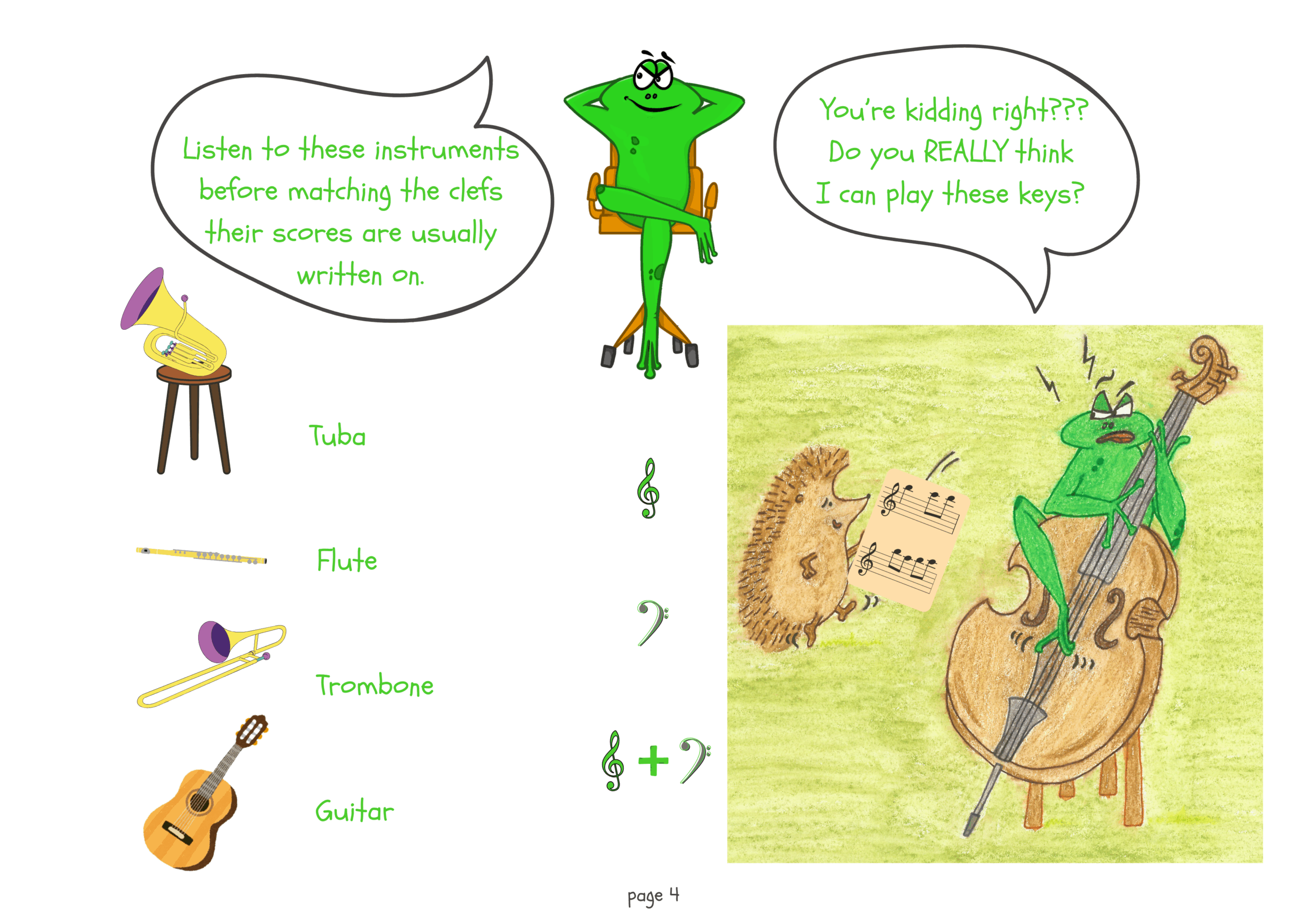
Finally, you can make them listen to different instruments ( I like to choose quite ‘opposites’ ex violin + contrabass, flute + tuba ) and make them think by asking: Where on the piano the flute would play? More to the right from your anchor ( middle c ) or to the left? And in which clef their scores would be written in?
In these ways, you help realise that playing higher is moving more to the right. Because the piano keyboard is not going to move vertically so that it suits your understanding for high-low you had till now.
Here are 2 interesting examples/games I give to my students so that we orientate properly on the piano keyboard from our first piano lessons. And of course, teach both clefs at the same time.
We have 2 hands people! And thanks to our evolution pianists use all of their 10 fingers ( king of the instruments…sorry not sorry, we’re rich!)
For more of the same material, games, drawing and matching pages, short and easy pieces with humoristic lyrics that teach basic music theory principles in a fun and effective, easy-to-understand way get
‘Workbook Sheet Music’ for piano beginners by Piano Comics. It is suitable for kids as young as 4 and other musical instruments as well since it teaches basic music theory.

Leave a Reply